



































Charge Air Cooler Leaks: The Hidden Cause of High Exhaust Gas Temperatures
by Megawatts - Updated At 2026-11-03
The fuel filters are fresh, the injectors are clean, and the turbo checks out healthy. Yet exhaust gas temperature keeps climbing. Many technicians chase fuel delivery first, and that instinct often points them at the wrong culprit.
Charge Air Cooler (CAC) Leaks reduce intake air density. The ECM then over-fuels to compensate, and high exhaust gas temperatures follow, frequently without a check engine light or a visible fluid leak.
These hidden Charge Air Cooler (CAC) Leaks leave no puddles and no obvious codes. Their symptoms mimic fuel or turbo faults. Many perceived sensor failures are actually boost leaks at intercooler connections. A regulated boost leak test exposes the truth.
Charge Air Cooler (CAC) Leaks and EGT: The Basics
What the CAC Does
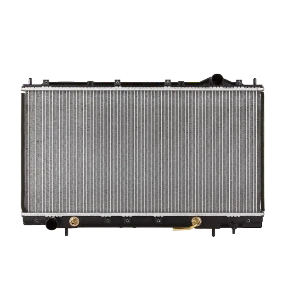
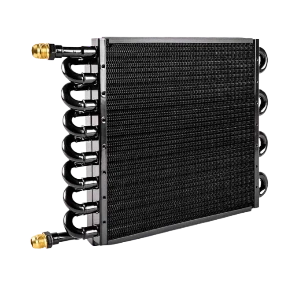
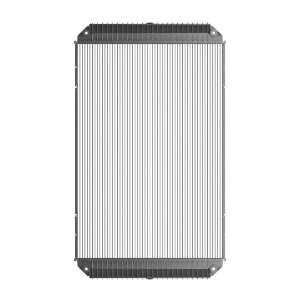
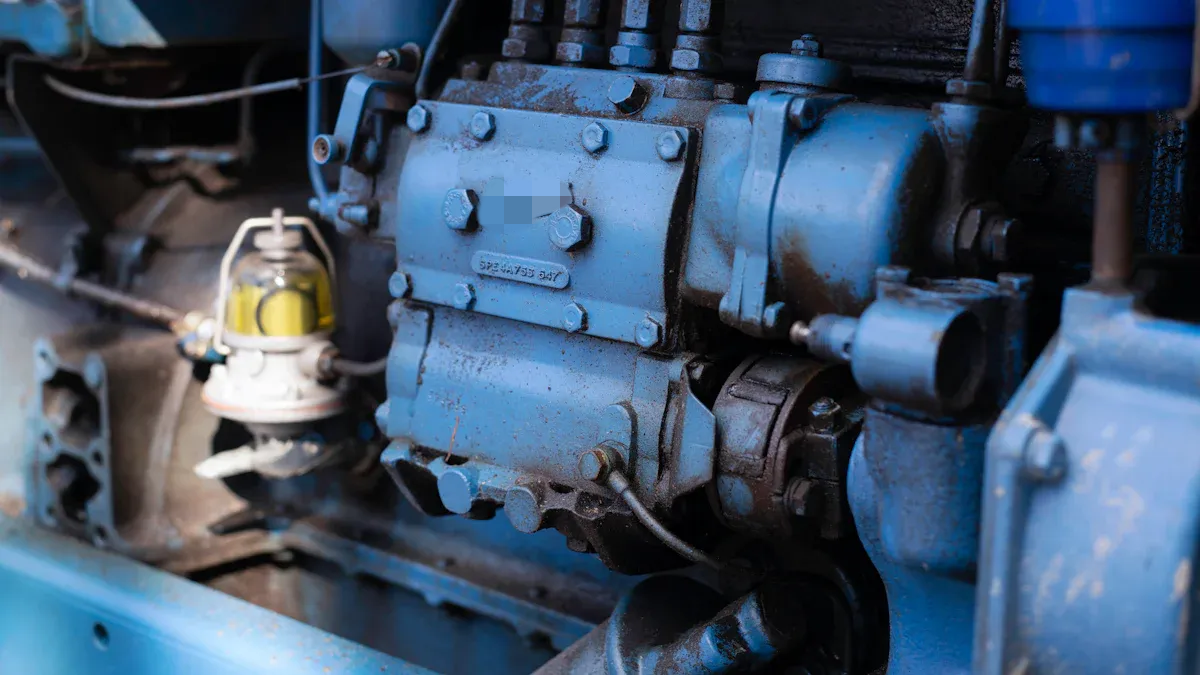
The charge air cooler sits between the turbocharger and the intake manifold. Its job is simple to state and easy to underestimate. The turbo compresses incoming air, and compression adds heat. The charge air cooler removes that heat before the air reaches the cylinders. The device acts as a highly efficient heat exchanger that cools air as it leaves the compressor. Effective charge air cooling reduces emissions, cuts fuel consumption, and raises power density.
The temperature drop is substantial. A high-functioning charge air cooler brings air from roughly 450°F at the turbo outlet down to about 40°F above ambient temperature at the intake manifold. The core holds pressure while it sheds heat, so the engine receives the same mass of air in a smaller, denser package. The charge air cooler is a critical component for efficiency, performance, and longevity in heavy-duty diesel engines.
Why Intake Air Density Drives EGT
Cooler air is denser air. Density matters because combustion depends on oxygen mass, not air volume. A denser intake charge carries more oxygen molecules into each cylinder on every stroke. More oxygen supports more complete fuel burn, and complete burn releases its energy inside the cylinder instead of sending unburned fuel into the exhaust stream as heat.
DieselNet makes the same connection from the other direction. Excessive charge temperature reduces charge density and raises combustion temperatures, which affects torque, power, and emissions. A healthy charge air cooler system therefore acts as a thermal regulator for the entire combustion event. When charge density falls, the ECM still meters fuel for the expected air mass. The result is a rich, hot burn and climbing EGT. This is why charge air cooler (cac) leaks deserve a place early in any hot-EGT diagnosis, and why a technician should treat intake density as a measured value rather than an assumption.
How a Charge Air Cooler Leak Raises EGT
Boost Loss and Over-Fueling
The chain starts with a breach in the charge circuit. Pressurized air escapes before it reaches the cylinders, and manifold pressure falls below the value the ECM expects. Intake air density drops with it. The ECM still injects fuel for the air mass it believes is present, so the mixture runs rich in oxygen terms. Unburned fuel leaves the cylinder as heat, and exhaust temperature climbs.
The reason this feedback loop is so stubborn is that in a diesel engine, added fuel raises exhaust temperature, and that heat spins the turbine harder and lifts boost. Boost then changes airflow and the air-fuel ratio, which feeds back into the fuel calculation. The relationship runs in both directions:
- Extra fuel raises exhaust temperature and turbine energy.
- Higher turbine speed raises boost pressure and airflow.
- Changed airflow alters the air-fuel ratio and the next fuel command.
Turbocharger speed, and therefore boost pressure, is driven by exhaust energy, which in diesel engines is heavily influenced by fuel delivery. This creates a strong relationship between fuel and boost, where changes to one will directly impact the other, requiring an iterative tuning approach.
A leaking CAC breaks that balance permanently. The turbo may overspeed trying to recover lost pressure, and elevated EGT levels follow with no code to explain them. A second problem hides in the same breach: unfiltered air enters the intake, carrying dust that accelerates cylinder and ring wear.
Damage to Turbo, Manifold, and DPF
Sustained heat travels downstream. The turbine housing and exhaust manifold see temperatures beyond their design margin, and repeated cycling can crack cast iron. The DPF loads faster because incomplete combustion produces soot, and regeneration cycles run hotter and more often. In severe cases, pistons and exhaust valves can melt. Catastrophic boost leaks rarely announce themselves before this point.
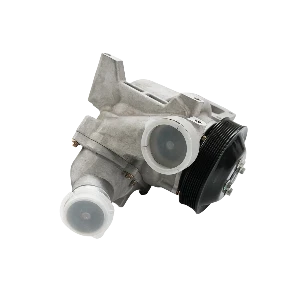
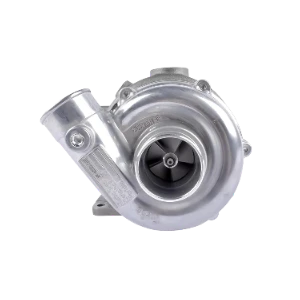
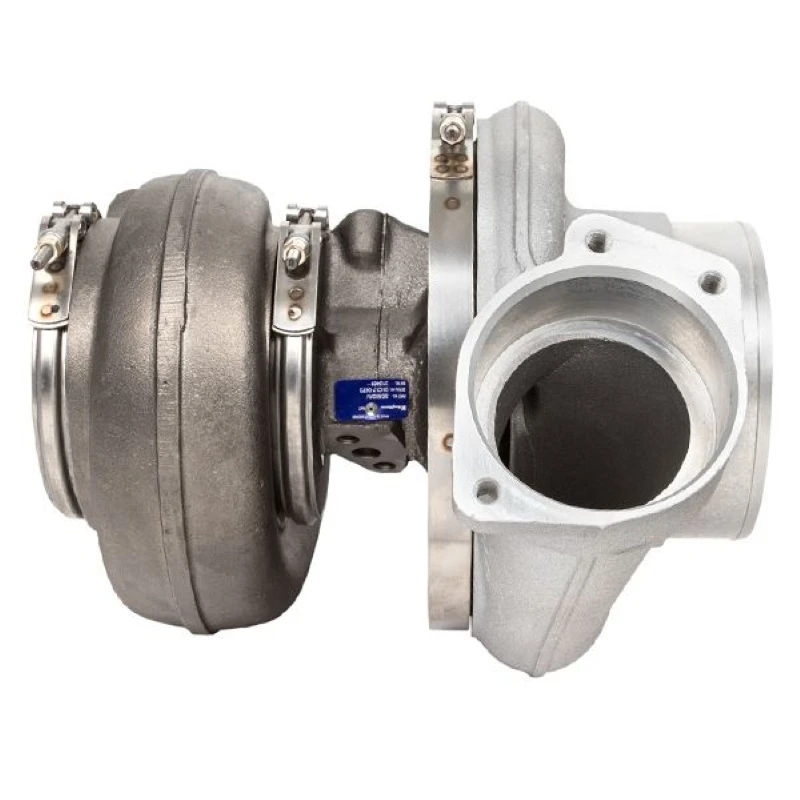
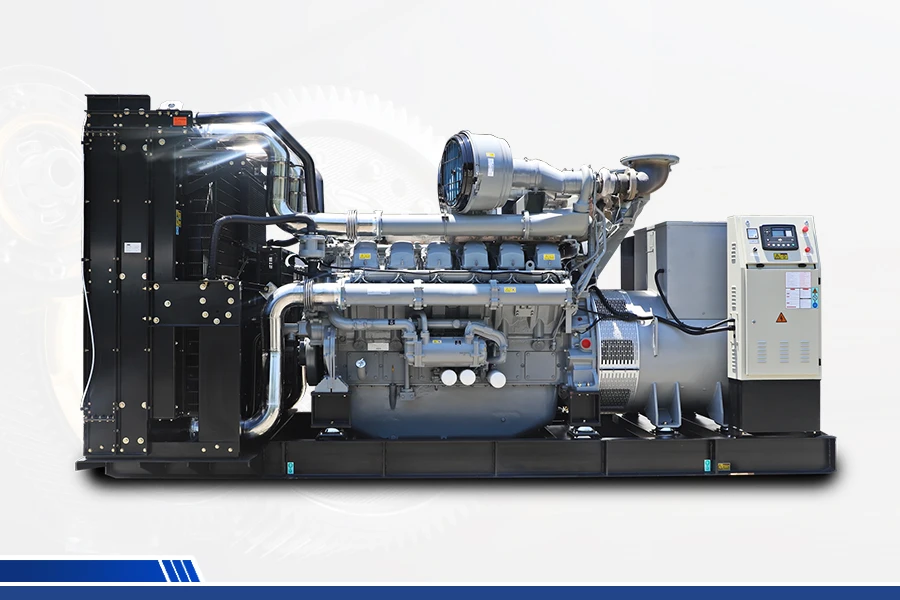
For high-capacity power generation units, this unchecked thermal stress destroys turbos rapidly. If prolonged EGT spikes have already caused irreversible turbine housing damage, installing a heavy-duty, direct-fit replacement like the SE652AV Perkins Turbocharger for 4000 Series is critical to restoring proper intake density and engine thermal balance.
Common causes of charge air cooler (CAC) leaks include:
- Heat stress
- Constant engine vibration
- Vehicle accidents or collisions
Road debris through the grille belongs on that list as well. A leaking CAC is therefore both a performance fault and a wear multiplier. Any CAC pressure test should sit early in the diagnostic order, before parts replacement begins.
Symptoms of a Leaking Charge Air Cooler
Performance and Driveability Clues
A leaking charge air cooler rarely fails outright. It degrades, and the driver feels the decline before any scan tool confirms it. Watch for these performance signals:
- Reduced fuel efficiency, as the ECM adds fuel to offset lost air mass.
- Weak power and sluggish acceleration on grades or at full load.
- Black smoke under acceleration from incomplete combustion, or white smoke at startup from oil contamination.
- Rising exhaust gas temperature and more frequent DPF regeneration.
- Boost-related fault codes such as P0299, P0234, or SPN 102.
Truetruckparts notes that even 20% fin blockage causes measurable power loss, and a fuel consumption increase on a familiar route deserves investigation. Some trucks also show engine temperature spikes under load, with oil temperature climbing and the fan engaging on the slightest hill.
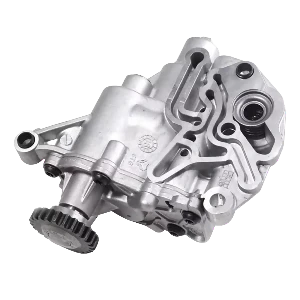
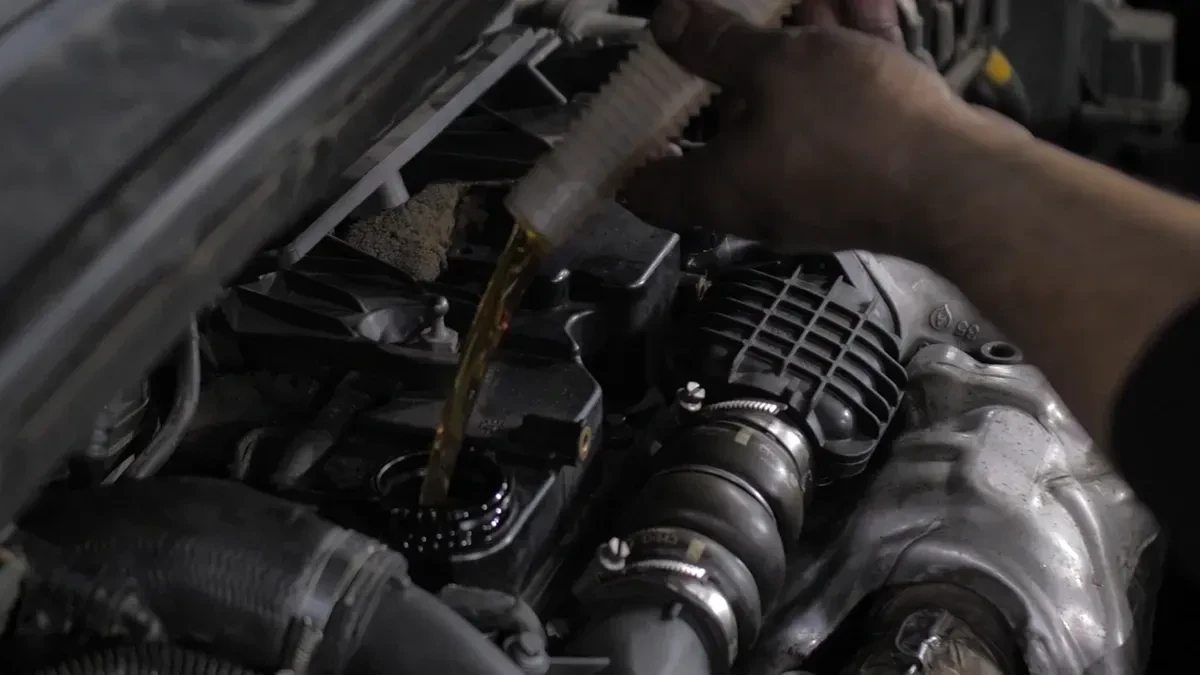
💡Related Technical Issue: Chronic high oil temperatures thin out engine oil, which can trigger secondary mechanical failures like oil pump cavitation and aeration. Poor EGR function often accompanies these clues.
Data and Visual Inspection Clues
Start every pre-trip inspection with a flashlight along the charge plumbing. Key visual warnings include oil mist around a boot or joint, clamp movement, a boot sitting crooked on the pipe, rub marks on aluminum tubing, split silicone, and cracked cooler tanks as visible warnings. Fresh clean streaks through otherwise dirty piping can mark escaping air.
A hiss under boost, low actual boost pressure, and oil mist around charge plumbing are data-side clues. Oil residue alone does not identify the leak, but a concentrated trail narrows the search. Remember that a small intercooler boot leak mimics fuel or turbo faults, so symptoms alone are not enough. A charge air cooler (cac) pressure test confirms the diagnosis. Micro-fissures in intercooler boots often open only under pressure, and visual inspection can miss them entirely.
How to Test a Charge Air Cooler
Symptoms narrow the search, but only a controlled test proves the fault. A charge air system pressure and smoke test turns a guess into a measurement. The procedure below follows standard industry method for testing boost leaks, and it works on most heavy-duty diesel platforms.
Pressure Test Procedure
Work on a cool engine, then disconnect the charge pipes from both the inlet and outlet sides of the cooler. Fit an end cap into each opening and clamp it down firmly. Confirm both caps are secure before any air enters the system.
Set the regulator to zero first. Lift the cap and turn the knob counter-clockwise until it stops, then close the shut-off valve by turning the handle across the air line. The arrow on the regulator body shows the direction of airflow.
- Connect shop air and open the valve slowly. Build to 5 PSI and listen for escaping air.
- Repair or replace anything leaking, retest, and step up to 10 PSI, then 15 PSI.
- Close the valve with air trapped inside and watch the gauge needle. A sound cooler holds steady for several minutes.
- Release all air before removing the plugs.
Wear eye protection throughout. Never connect unregulated shop air, and always build pressure in stages. The tester itself can reach 60 PSI, but the cooler rarely needs that much. Consult the manufacturer's specification for the correct test pressure on your application; radiator supply house documentation cites roughly 30 PSI for Cascadia applications as one reference point.
Confirming the Leak Location
Pressure decay proves air is escaping, not where. Soapy water converts the test into a location-specific inspection. Spray the inlet neck, outlet neck, end tanks, tank seams, tube-to-header joints, welds, core face, corners, mounting areas, and any impact mark. A fine bubble stream can expose a pinhole invisible on a dry core.
|
Leak point |
Inspection clue |
|
Tube-to-header joint |
Bubbles along the row where tubes meet the header plate |
|
End tank seam |
Oil staining, dirt line, or bubbles along the tank edge |
|
Inlet or outlet neck |
Leak at the bead area, split neck, or repeated boot blow-off |
|
Core face |
Small bubble point on an exposed tube or crushed fin area |
|
Mounting area |
Crack near a bracket, rub mark, or uneven support load |
Record results consistently, for example: pressurized to 25 psi, dropped to 18 psi after 60 seconds, bubbles at the right lower tank seam. Photograph the leak point for the repair file.
Rule out other boost culprits before condemning the cooler. Gillett Diesel advises comparing commanded versus actual vane position during idle, a snap throttle test, and a road test. A weak wastegate actuator bleeds pressure, and a pre-turbo exhaust leak steals turbine energy. Both mimic a charge air cooler fault. Check for black soot at exhaust joints and ballooned intercooler boots at the same time. An experienced technician treats pressure and smoke testing as one workflow, because a small boot leak that only opens under boost will pass a static visual check every time.
Repair Options for a Small Intercooler Boot Leak and More
Sealing, Hoses, and Gaskets
A small intercooler boot leak usually needs only a new boot, clamp, or hose. Owners on TheDieselStop report that fresh boots solve the problem while the pipes remain serviceable. Clean oil residue with degreaser first, since the film is normal. Some owners apply hairspray to cleaned pipes to stop boots from blowing off, and one repair manual lists clamp torque at 71 lb/in. New charge air cooler (cac) boots should still allow slight movement for engine torque. Silicone intercooler boots resist heat better than stock rubber. Intake manifold gasket seal kits and heavy-duty charge air hoses are common replacement items once the circuit is open.
When the Cooler or Valvetrain Needs Attention
Core damage decides the path. Repair paths typically include cleaning, patching, rebuilding, and replacement. All-aluminum units, for example, can often be rebuilt at significant savings. Turbo failure changes the calculus. Industry engineering guidelines strictly warn:
Charge air coolers are crisscrossed by narrow pipework. If metal particles get into a charge air cooler, they can't be reliably removed by cleaning or flushing. That's why replacement is essential in the event of a mechanical turbocharger defect.
Sustained heat also reaches the valvetrain. Common downstream heat damage patterns include:
|
Valvetrain Component |
Heat Damage |
|
Exhaust valve |
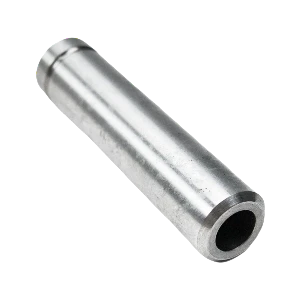
Guttering, seat recession, burned edges |
|
Valve face and stem |
Warping from uneven temperature gradients |
|
Valve seat insert |
Softening and recession |
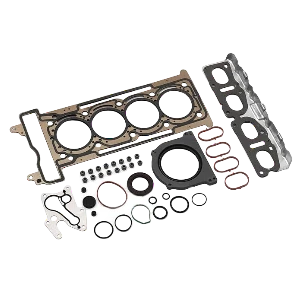
When a replacement is unavoidable, Megawatts Parts supplies premium aftermarket and genuine engine components to restore proper thermal balance. Whether your repair requires high-heat silicone hoses, replacement turbochargers, piston kits, or complete engine gasket sets for Cummins, Perkins, Caterpillar, or Volvo applications, sourcing reliable parts is critical. A simple boot and clamp fix suits low downtime situations, while complete core replacement or valvetrain overhaul is required for severe heat damage.
A charge air cooler (cac) leaks story follows one path every time. Boost escapes, intake air density falls, the ECM adds fuel the oxygen cannot burn, and exhaust gas temperature climbs until the turbo, DPF, or pistons pay the bill.
Treat high EGT as a symptom to trace, not a problem to mask. A pressure test belongs early in any hot-EGT diagnostic, and the procedure to test your charge air cooler takes minutes. Inspect charge air hoses, intake manifold gaskets, and valvetrain components as part of a complete repair. Act at the first symptom, while a CAC boot still costs less than a turbo.
FAQ
Can a leaking charge air cooler cause high EGT without any warning light?
Yes. A small boot leak often escapes the ECM's plausibility checks. Boost loss stays modest, fuel correction stays within limits, and no code sets. Exhaust temperature still climbs. This silent behavior explains why technicians replace fuel system parts first and find no improvement.
How do I test your charge air cooler for a leak at home?
Cap both cooler openings, then apply regulated air in stages. Start near 5 PSI, listen for hiss, and watch the gauge for decay. Soapy water on the necks, seams, and core face pinpoints the escape point. Consult the manufacturer's specification before exceeding the staged pressure.
What does a small intercooler boot leak feel like from the driver's seat?
Expect sluggish acceleration on grades, black smoke under load, and falling fuel economy. Some trucks show oil temperature climbing with the fan engaging on the slightest hill. These clues mimic fuel or turbo faults, so confirm with a pressure test before replacing parts.
When should I replace the cooler instead of repairing it?
Core damage decides the path. Cleaning, patching, and rebuilding suit many aluminum units at significant savings. Replacement becomes essential after a mechanical turbo failure, because metal particles lodge in the narrow internal pipework and resist flushing. Confirm heat damage to valves before authorizing valvetrain work.
Can I drive with a leaking charge air cooler?
Short distances to a repair bay are usually acceptable at reduced load. Sustained driving raises EGT, loads the DPF faster, and can crack the exhaust manifold or melt pistons in severe cases. Treat any confirmed leak as urgent, not seasonal.
Read More
-
 BLOG
 Megawatts BlogOil Pump Cavitation and Aeration in High-Hour Diesel Engines: Symptoms and SolutionsOil pump cavitation and aeration look alike on a gauge, yet they start differently. Cavitation means vapor bubbles form and collapse inside the pump. Oil aeration means air enters the oil stream and t...
-
 BLOG
Megawatts BlogDiagnosing Generator End Failures: Rotating Diodes and Rectifier Bridge TestingA generator that will not build voltage sends most technicians straight to the exciter circuit. The rotating diodes and the rectifier bridge belong at the top of that list. Both components are testabl...
-
 BLOG
Megawatts BlogMagnetic Pickup (MPU) Sensors: How to Diagnose and Adjust Speed Sensor ClearancesMost speed-sensing faults on Magnetic Pickup (MPU) Sensors trace back to one thing: the air gap between the sensor tip and the target tooth. Diagnosis starts with the symptoms — no signal, errat...
-
 BLOG
Megawatts BlogTier 4 Final & Common Rail Systems: Why Micro-Contamination Destroys Modern Diesel InjectorsMicro-contamination destroys modern diesel injectors because Tier 4 Final common rail systems run at extreme pressure with micron-level tolerances. Debris that bypasses filtration scores precision com...
Subscribe to enjoy 10% off
Stay informed about new products and sales

-
INFORMATION
Contact Us
-
CHINA SALES OFFICE: No. 2-11, No. 8, Gaotai Road, Gaishan Investment Zone, Cangshan District, Fuzhou, Fujian
-
SAUDI ARABIA FACTORY: 7264 Shakra, Al Faisaliyyah, REFB3035, 3035, Riyadh 12883
-
COLOMBIA SALES OFFICE: 92-32 26th Street, 03-118, Bogota
-
NIGERIA FACTORY: Plot 5 Chivita Avenue Ajao Estate Isolo Lagos
-
Email:sales@megawattsparts.com
Follow Us


Copyright © 2025 Megawatts All Rights Reserved.



Select Previous Button or Search Directly on Search Bar!
Shop All
 English
Currency: <{ pagedata.current_currency }>(<{ pagedata.current_currency_code }>)
Are you in the right place?

You agree to MegaWatts.com's Terms of Use and Privacy Policy by subscribing. You may receive emails with useful tips, promotions, and offerings.
No, thanks. I'd rather pay full price.