















































The Hidden Cost of Expired Inventory: Shelf Life and Proper Storage of Rubber Gasket Seal Kits
by Megawatts - Updated At 2026-09-17
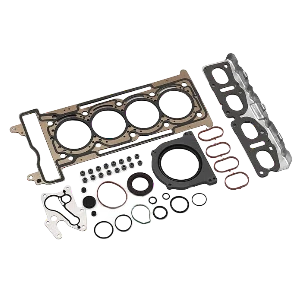
A gasket seal kit sits untouched for five years. You paid for it. Now you pay to dispose of it. When a failure occurs, you pay a premium for emergency replacement. These hidden costs accumulate silently. Many buyers overlook them because shelf life feels abstract. In reality, even unopened rubber gaskets in a gasket seal kit degrade from ozone, UV, and temperature swings. Field inspections often reveal cracked gaskets during routine pump rebuilds—even when the part has never left its box.
Material selection and proper storage extend the shelf life of gasket seal kits, eliminate waste, and save thousands per year.
Real Cost of Expired Gasket Seal Kits

Direct Waste and Disposal Costs
Expired gasket seal kits represent a total loss. The purchase price is gone. Disposal adds another expense. Rubber waste often falls under hazardous or special-handling rules in many jurisdictions. Disposal fees vary by region and volume. The exact figure depends on local regulations. The pattern holds everywhere: you pay twice for a part that never did any work.
Storage itself consumes money. Warehouse space, climate control, and handling labor all carry a price. An aging gasket occupies that space for years while delivering zero value. Multiply this across a full storeroom, and the waste becomes substantial. A disciplined inventory audit exposes these losses quickly.
Emergency Replacement and Downtime Premiums
A failed gasket never waits for a convenient moment. Emergency shipping typically runs about twice the normal rate. Expedited freight, air cargo, and special handling all add up. The larger expense is downtime. Lost production dwarfs every other cost in this equation.
A 180-asset tire and seal plant running a high-volume calender line loses $7,500 per hour in margin during unplanned downtime. With 120 hours of annual unplanned downtime, the baseline downtime cost reaches $900,000.
|
Facility Size |
Production Downtime Cost per Hour |
|
Small Facility (10 employees) |
$2,000 – $5,000 |
|
Medium Facility (50 employees) |
$10,000 – $20,000 |
|
Large Plant (200+ employees) |
$50,000 – $150,000 |
A food processing facility once suffered a gasket blowout. Six hours of downtime cost $12,000 in lost production, or $2,000 per hour. Industry experience proves a simple truth: there is no such thing as a cheap emergency replacement, only expensive downtime. Fresh, properly stored stock from a supplier like Megawatts Parts prevents these premiums. Their inventory rotates continuously, so every gasket arrives within its useful shelf life.
Understanding the Shelf Life of Rubber Gaskets
Material-Specific Shelf Life Differences
The shelf life of rubber products depends heavily on the elastomer compound. A nitrile gasket and a fluorocarbon gasket may look identical on the shelf. Their storage lives differ dramatically. This variation surprises many maintenance teams.
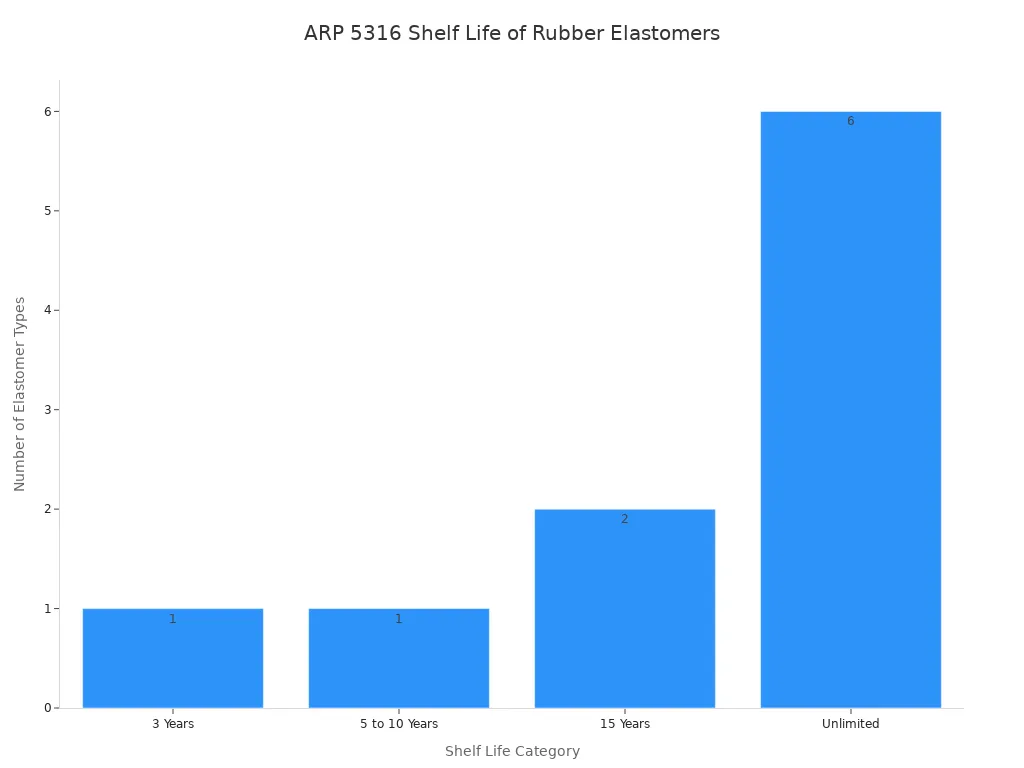
Nitrile (NBR) gaskets typically carry a recommended shelf life of 15 years under ARP 5316 guidelines. Some manufacturers cite shorter windows of 3 to 5 years for specific formulations. Fluorocarbon (FKM) gaskets often receive an unlimited shelf life rating. Silicone, EPDM, butyl, and PTFE also fall into the unlimited category. Polyurethane gaskets generally last 5 to 10 years. Styrene-butadiene rubber (SBR) has the shortest window at 3 years.
Field data highlights this risk. When a maintenance team installed a five-year-old nitrile gasket from deep storage, the silently hardened material failed within 72 hours of startup, forcing an unplanned outage. The replacement cost was minor. The downtime cost reached six figures. This scenario repeats across industries when teams treat all rubber parts as interchangeable.
Industry Standard Recommendations (ARP 5316)
SAE ARP 5316 provides the benchmark for elastomeric seal storage. This recommended practice categorizes shelf life and elastomer types into clear groups. The standard assigns unlimited shelf life to fluorocarbon, silicone, EPDM, butyl, fluorosilicone, and PTFE. Nitrile and neoprene receive 15-year ratings. Polyurethane falls into the 5 to 10 year range. SBR carries a 3-year limit.
The standard also mandates specific storage conditions. Temperature must stay below 100°F (38°C). Humidity should remain below 75%, or below 65% for urethanes not in sealed moisture-proof bags. Storage areas must avoid direct sunlight, ozone-generating equipment, and ionizing radiation. Gaskets should rest free of tension, compression, or kinks. Large o-rings should coil in three equal loops.
ARP 5316 further requires labeling components with manufacture date and batch number. Regular inspections for cracking, hardening, or discoloration are essential. Components exceeding their recommended shelf life need revalidation testing before installation. These rules apply to all seals, from small o-rings and sealing washers to large custom gaskets.
The shelf life of rubber gaskets is not a suggestion. It is a technical limit rooted in polymer chemistry. Buyers who understand these material differences make smarter sourcing decisions. They avoid the trap of treating every rubber gasket as identical. This knowledge directly reduces waste and prevents premature failures in the field.
Storage Conditions That Maximize Shelf Life of Rubber Products

Effects of Ozone, UV, and Temperature Cycling
Ozone attacks rubber at the molecular level. Electric motors, welding equipment, and fluorescent lighting generate this gas continuously. A gasket stored near a compressor might develop surface cracks within months. These cracks penetrate deeper over time. The part fails upon installation.
Ultraviolet radiation causes similar damage. Sunlight streaming through a warehouse window degrades rubber compounds. Neoprene offers strong resistance to UV, weather, and ozone compared with natural rubber. Other materials lack this protection. Seals stored on open shelves face constant exposure. Opaque, sealed containers made from UV-blocking materials prevent this degradation. Storage areas should remain free of ozone-emitting equipment.
Temperature cycling creates a different problem. Repeated heating and cooling cycles induce micro-cracks within the gasket structure. These small defects propagate over time. A technical report on high-temperature behavior of composite gaskets confirms this failure mode. The material fatigues like a person tiring after repeatedly running stairs. Cracks and fractures eventually compromise seal integrity. Field data confirms this failure mode. A nitrile gasket subjected to years of warehouse temperature swings can fail rapidly upon startup due to thermal degradation.
Ideal Temperature and Humidity Range
Proper storage conditions for rubber products follow clear parameters. The ideal temperature range is 15–25°C. Storage temperatures should never exceed 50°C. High temperatures permanently harden rubber. Very low temperatures make rubber brittle and inflexible. Both extremes shorten the shelf life of rubber gaskets.
Relative humidity should remain below 70%. Excessive moisture promotes mold growth and rubber degradation. Condensation corrodes metal components within seal kits. An EPDM rubber ring supplier recommends this threshold specifically to preserve gasket performance. The optimum humidity sits around 65% in a draft-free atmosphere.
|
Material |
Ideal Storage Temperature |
Ideal Storage Humidity |
|
Silicone (VMQ/PVMQ) |
15–25°C |
Below 70% RH |
|
Viton (FKM) |
15–25°C |
Below 70% RH |
|
Neoprene (CR) |
15–25°C |
Below 70% RH |
|
EPDM |
15–25°C |
Below 70% RH |
|
Nitrile (NBR) |
15–25°C |
Below 70% RH |
|
SBR |
15–25°C |
Below 70% RH |
This storage recommendation applies across material types. The storage period prior to gasket installation directly affects performance. A gasket stored correctly retains its properties for years. One stored poorly may fail immediately. The storage period prior to part installation matters equally for o-rings and other rubber components.
Rubber gasket seals can be formulated to resist chemicals, oils, solvents, and harsh substances. They also withstand extreme temperatures, UV radiation, and ozone exposure. These capabilities suit demanding environments. Storage conditions determine whether those capabilities survive until installation. The shelf life of rubber products depends on controlling temperature, humidity, ozone, and UV exposure. Gaskets stored under these conditions deliver reliable performance when needed.
Procurement Tactics to Control Shelf Life and Reduce Waste
Just-in-Time Ordering and Low MOQs
Excess stock creates a silent liability. Every extra gasket seal kit on the shelf ages with each passing month. Smart procurement avoids this trap through just-in-time ordering. This approach aligns deliveries with actual consumption rates. The result is fresher inventory and less waste.
Suppliers offering low minimum order quantities make this strategy practical. A maintenance team can order exactly what they need for the next quarter. No minimum order quantity or minimum order value enables fast delivery of individual seals or components. For standard sizes, there is no MOQ. Megawatts Parts supports this model with flexible ordering options and fast shipping. Their rapid fulfillment minimizes the time rubber parts sit in storage. Supply chain data consistently shows that emergency orders always cost significantly more than planned inventory. Low MOQ ordering prevents that scenario entirely.
Inventory Rotation and Date Code Tracking
First-in, first-out rotation forms the backbone of effective shelf life monitoring. Older stock moves out before newer arrivals. This simple discipline prevents expired parts from hiding in dark corners. A technical advisor with decades of experience in industrial supply chains emphasizes one rule: never let a gasket sit while a fresher one waits behind it.
Date code tracking makes FIFO practical. Every gasket seal kit should carry a manufacture date and batch number. Staff can then identify aging stock at a glance.
Several practices support this system:
- Keep rubber seals in opaque packaging or containers to prevent light exposure.
- Keep them away from ozone-generating sources such as electric motors, fluorescent lights, and welding equipment.
- Apply first-in, first-out (FIFO) stock rotation so older seals are used before they degrade while sitting in storage.
- When storing several seals together, do not stack heavy parts on top of them, as this can distort their shape.
These tactics directly extend the usable shelf life of every rubber gasket and seal in your storeroom.
Audit your current inventory and discard expired gasket seal kits immediately. Implement proper storage conditions with controlled temperature, humidity, and ozone protection. Adopt smarter procurement tactics like lower MOQs and just-in-time ordering. These three actions directly reduce the hidden costs of waste, emergency replacements, and downtime. A failed gasket never waits for a convenient moment. Proper shelf life management prevents that scenario. Contact Megawatts Parts for a free inventory assessment or browse their selection of fresh, properly stored rubber gasket seal kits. Their team ensures every gasket arrives ready for reliable service.
Featured OEM Part: Looking for guaranteed reliability?
Check out the Genuine Lister Petter Engine Gasket Seal Kit (LP00032817), stored under strict climate control by our team to ensure immediate, peak performance right out of the box.
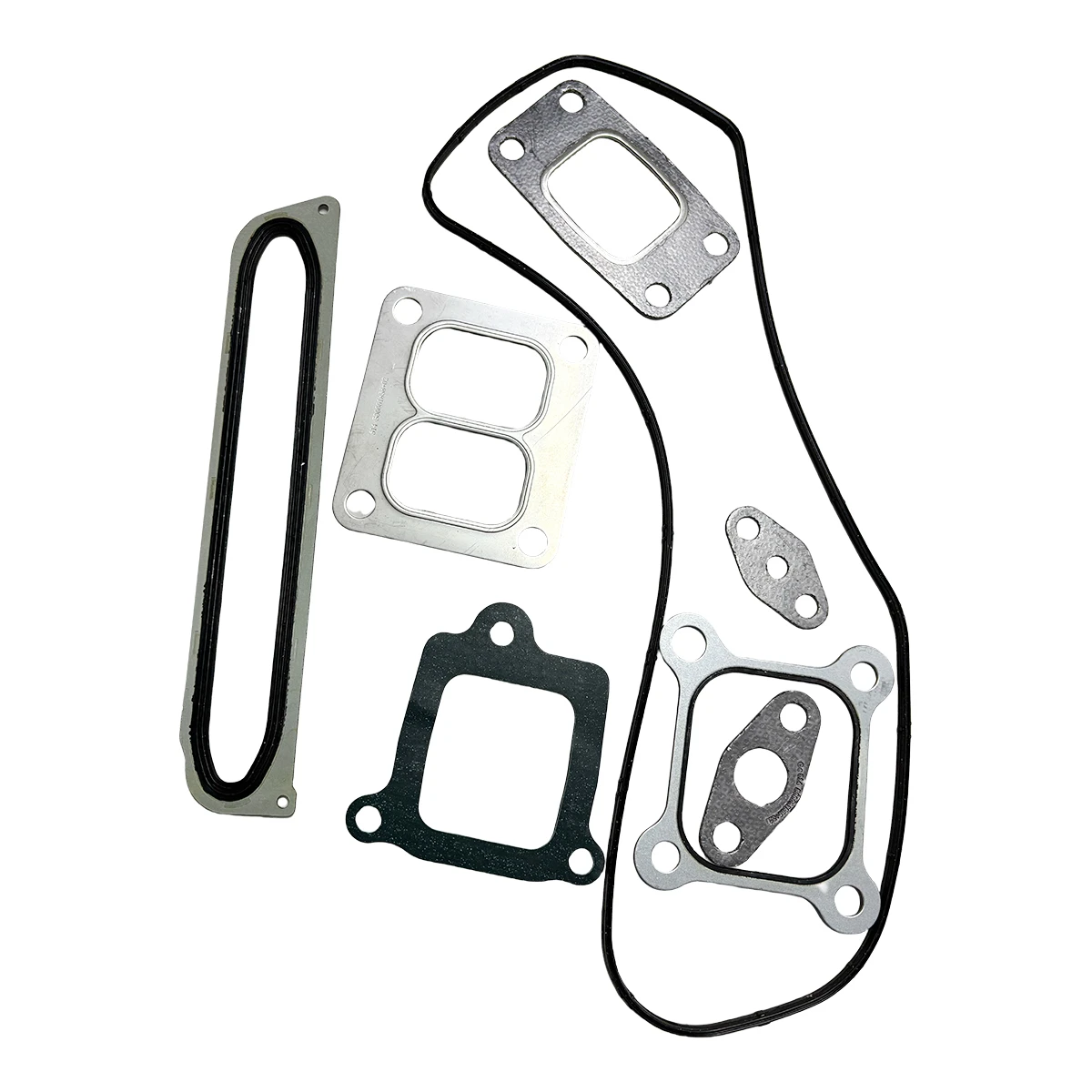
LP00032817 Engine Gasket Seal Kit - Genuine Lister Petter Engine Parts
$231.35
FAQ
How long does a rubber gasket seal kit remain usable in storage?
Material shelf life varies. Nitrile gaskets last 5–15 years per ARP 5316. Fluorocarbon and silicone receive unlimited ratings. Always verify the manufacture date before installation.
What temperature and humidity preserve gasket seal kits best?
Store between 15–25°C with relative humidity below 70%. Avoid temperature cycling, which causes micro-cracking. Keep gaskets away from direct sunlight and ozone-emitting equipment.
Can a gasket seal kit fail soon after installation from poor storage?
Yes. Field data confirms that a nitrile gasket can fail within 72 hours of startup due to hardening from warehouse temperature swings.
How does ozone damage rubber gaskets in long-term storage?
Ozone attacks rubber at a molecular level, creating surface cracks. Electric motors and welding equipment emit ozone. Seal kits near these sources degrade faster than those in sealed containers.
What is the best rotation method for gasket seal kit inventory?
Use FIFO rotation with date code tracking. Old stock leaves storage first. Regular audits prevent expired seals from hiding in your storeroom. This discipline reduces waste and emergency replacement costs.
Read More
-
 BLOG
BLOG Megawatts BlogCombating Diesel Bug: How Your Fuel Water Separator Filter Prevents Sludge and Microbial GrowthHave you noticed your engine struggling to start, fuel filters clogging more often, or dark sludge in the fuel system? These symptoms indicate diesel bug—microbial contamination that thrives on...
 -
 BLOG
Megawatts BlogComplete Water Pump Assemblies vs. Pressing Bearings: The Most Cost-Effective Repair StrategyFor most drivers and equipment operators, complete water pump assemblies are the most cost-effective repair for the engine's cooling system. When deciding between a full water pump replacement or pres...
BLOG
Megawatts BlogComplete Water Pump Assemblies vs. Pressing Bearings: The Most Cost-Effective Repair StrategyFor most drivers and equipment operators, complete water pump assemblies are the most cost-effective repair for the engine's cooling system. When deciding between a full water pump replacement or pres... -
 BLOG
Megawatts BlogWinter Emergencies: Why Your Diesel Generator Won't Crank in Sub-Zero TemperaturesDarkness descends as a relentless blizzard knocks out power. You shuffle to the unit, press the start button, and hear a single sluggish click. Your generator won't crank. In sub-zero temperatures, th...
BLOG
Megawatts BlogWinter Emergencies: Why Your Diesel Generator Won't Crank in Sub-Zero TemperaturesDarkness descends as a relentless blizzard knocks out power. You shuffle to the unit, press the start button, and hear a single sluggish click. Your generator won't crank. In sub-zero temperatures, th... -
 BLOG
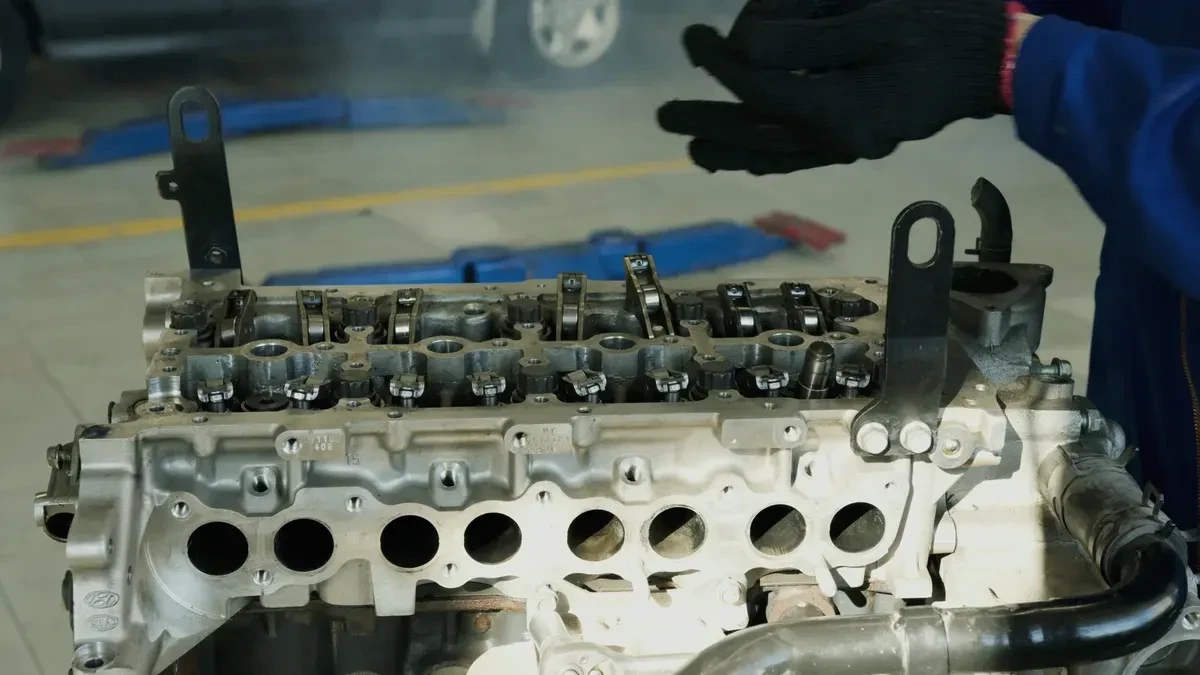
Megawatts BlogUnderstanding Multi-Layer Steel (MLS): Why Premium Gasket Seal Kits Are Essential for High-Compression DieselsEvery diesel mechanic knows the dread. A blown head gasket on a high-compression diesel engine means catastrophic failure. Repair costs range from $3,000 for simple replacement to over $20,000 for a c...
BLOG
Megawatts BlogUnderstanding Multi-Layer Steel (MLS): Why Premium Gasket Seal Kits Are Essential for High-Compression DieselsEvery diesel mechanic knows the dread. A blown head gasket on a high-compression diesel engine means catastrophic failure. Repair costs range from $3,000 for simple replacement to over $20,000 for a c...
Subscribe to enjoy 10% off
Stay informed about new products and sales

-
INFORMATION
Contact Us
-
CHINA SALES OFFICE: No. 2-11, No. 8, Gaotai Road, Gaishan Investment Zone, Cangshan District, Fuzhou, Fujian
-
SAUDI ARABIA FACTORY: 7264 Shakra, Al Faisaliyyah, REFB3035, 3035, Riyadh 12883
-
COLOMBIA SALES OFFICE: 92-32 26th Street, 03-118, Bogota
-
NIGERIA FACTORY: Plot 5 Chivita Avenue Ajao Estate Isolo Lagos
-
Email:sales@megawattsparts.com
Follow Us


Copyright © 2025 Megawatts All Rights Reserved.



Select Previous Button or Search Directly on Search Bar!
Shop All
 English
Currency: <{ pagedata.current_currency }>(<{ pagedata.current_currency_code }>)
Are you in the right place?

You agree to MegaWatts.com's Terms of Use and Privacy Policy by subscribing. You may receive emails with useful tips, promotions, and offerings.
No, thanks. I'd rather pay full price.