
























Vendor Consolidation: Streamlining Your Supply Chain for Generator Sets Parts
by Megawatts - Updated At 2026-08-25
Managing ten different suppliers for filters, alternators, and controllers isn't just an administrative headache—it's a massive drain on your profitability. Delayed shipments, mismatched parts, and endless email threads are the hidden costs of a fragmented supply chain. Vendor consolidation strategically reduces this chaos, paring your supplier base down to a few trusted global partners. For critical generator sets parts, this approach is the fastest route to simplifying operations and slashing your Total Cost of Ownership (TCO).
This post details financial and operational benefits, a step-by-step consolidation process, and selecting a global partner like Megawatts Parts for long-term reliability. Many fear single-sourcing risk—becoming overly dependent on one vendor. The process section provides mitigation strategies, including pilot testing and performance reviews. Consolidation does not mean vulnerability; it means controlled, efficient sourcing.
Why Consolidate Generator Sets Parts
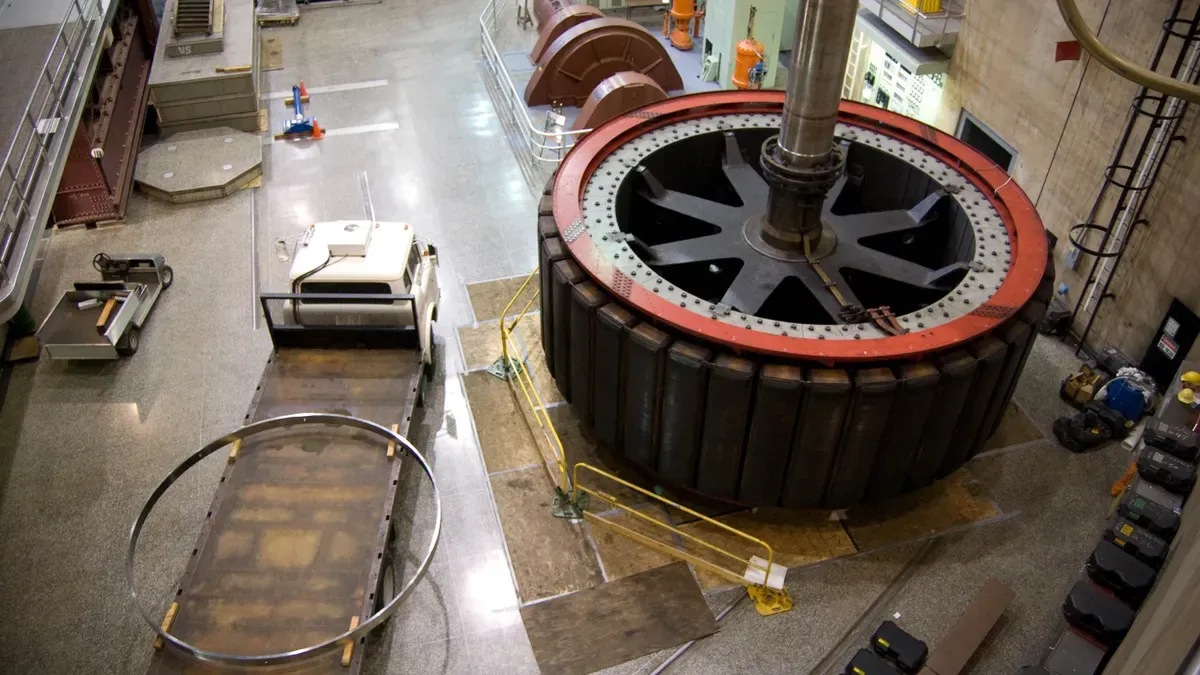
Procurement leaders face mounting pressure to control costs while ensuring uninterrupted supply of critical components. The fragmented supplier model—dozens of vendors, hundreds of invoices, endless email threads—creates hidden expenses that erode profitability. Consolidation directly addresses these inefficiencies.
Unlocking Cost Savings and Efficiency
The administrative burden of managing multiple suppliers is substantial. Consider these figures:
- Procurement teams at small and mid-sized businesses spend 30-40% of their time on supplier administration rather than strategic sourcing.
- Finance departments with bloated supplier bases spend 20-30% more on accounts payable processing than businesses with consolidated purchasing.
- Organizations applying consolidation strategically in indirect spend categories report accounts payable workload reductions of 60-70% in those areas.
The math is straightforward. Fewer suppliers mean fewer purchase orders, fewer invoices to match, fewer discrepancies to resolve. Accounts payable teams handle hundreds of separate invoices monthly in an unconsolidated environment. Each invoice requires matching to purchase orders, accuracy checks, and approvals. Vendor consolidation reduces invoice volume proportionally and makes remaining invoices easier to reconcile from known, predictable sources.
Beyond administrative savings, the Total Cost of Ownership (TCO) framework reveals deeper financial advantages. TCO extends beyond unit price to include freight, expediting, returns management, and communication costs. A multinational procurement manager ordering generator sets parts from ten different suppliers across three continents pays for ten separate freight arrangements, ten customs clearances, and ten communication channels. Centralizing those orders with a global distributor like Megawatts Parts collapses those costs into a single logistics stream.
Consolidation also strengthens bargaining power. A buyer committing substantial volume to one supplier commands better pricing, priority allocation, and favorable payment terms. The savings from negotiation leverage often exceed the visible price differences between vendors.
Building a Stable and Responsive Supply Chain
Operational stability improves dramatically with fewer suppliers. Standardization of procedures becomes easier when procurement teams work with one set of processes rather than adapting to each vendor's quirks. Delivery schedules can be synchronized by a single supplier, reducing delays caused by mismatched arrival times.
Streamlined communication accelerates issue resolution. One phone call to a known contact replaces a chain of emails to multiple vendors. When a shipment arrives with a damaged component, the consolidated supplier owns the problem entirely—no finger-pointing between manufacturers and distributors.
Inventory forecasting becomes more accurate with a consolidated supply base. A single supplier provides complete visibility into stock levels, lead times, and potential shortages. This visibility enables proactive planning rather than reactive firefighting.
Megawatts Parts exemplifies this stability through its global presence in China, Saudi Arabia, Colombia, and Nigeria. This geographic footprint ensures consistent supply regardless of regional disruptions. When one market faces shipping delays, inventory can be redirected from another location. For procurement managers sourcing generator sets parts across multiple regions, this resilience is invaluable.
Priority treatment during shortages is another benefit. Suppliers allocate scarce inventory to their most valuable customers first. A consolidated buyer represents significant revenue to the supplier, earning preferential treatment when supply tightens. Fragmented buyers remain small accounts to each vendor, receiving standard allocation at best.
The operational advantages compound over time. Fewer suppliers mean deeper relationships, better data exchange, and continuous improvement. Procurement teams shift from tactical firefighting to strategic sourcing.
A Step-by-Step Process for Generator Sets Parts Consolidation

Auditing Your Current Supplier Base
The consolidation journey begins with a rigorous audit of your existing supplier landscape. Procurement teams must categorize every vendor by annual spend, average lead time, and historical reliability. This exercise reveals where money flows, which suppliers consistently deliver, and which ones create recurring headaches.
Start by classifying your inventory into four strategic tiers. This framework helps prioritize attention where it matters most:
|
Class |
Criteria |
Examples |
Stock Strategy |
|
A - Critical Insurance |
High impact + long lead time + single source |
Turbine rotor, generator stator, transformer |
Hold 1-2 units; review remaining useful life quarterly; qualify alternative suppliers |
|
B - Operationally Critical Fast-Movers |
High consumption + significant impact + moderate lead time |
Pump bearings, mechanical seals, valve actuators |
Dynamic reorder point; monthly min/max calculation; two-source preferred |
|
C - Routine Consumables |
Low-to-moderate impact + predictable consumption + short lead time |
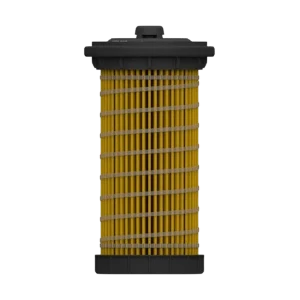
Filter elements, gaskets, O-rings |
Vendor-managed inventory; reorder from 90-day consumption average |
|
D - Review for Disposal |
Zero consumption in 3+ years + equipment retired |
Parts for retired units, superseded components |
Disposition review: return, sell, or write off |
This classification directly supports consolidation decisions. Class A items demand a supplier with proven reliability and global reach. Class C items offer the easiest consolidation wins because they are standardized, high-volume, and low-risk.
Measure supplier performance using the On-Time Delivery Rate (OTD): On-Time Delivery Rate = (Number of on-time deliveries / Total deliveries) × 100. Reliable suppliers consistently score above 90%. Track lead time consistency and order accuracy alongside OTD. A supplier that delivers on time but frequently ships incorrect quantities creates hidden costs that erode apparent savings.
The audit also reveals the "critical few" parts causing the most downtime. For generator sets parts, these are often long-lead components with single-source constraints. Identify them explicitly. A single uncovered turbine blade set can delay restart by 3–8 weeks. Quantify the cost of that downtime against the effort required to consolidate that supplier relationship.
Executing the Transition Without Downtime
Plan a Phased Transition: When consolidating, phase changes over time instead of switching vendors all at once. This approach minimizes disruption and helps internal teams adapt smoothly.
A phased rollout protects operations. Begin with a pilot category—routine maintenance kits are ideal. These parts are standardized, low-risk, and high-volume. Test the new vendor's performance for 30 days. Measure OTD, order accuracy, and responsiveness. Only after the pilot succeeds should you scale to more complex categories.
Time the transition around contract renewal dates. This avoids paying for overlapping supplier agreements. If additional time is needed, negotiate short bridge terms rather than long commitments. Lock in governance by embedding the consolidated framework into daily operations. Use spend management tools that enforce approved vendor policies and category controls.
Cross-referencing part numbers and validating samples before mass ordering is non-negotiable. Follow these best practices:
- Use standardized definitions (e.g., drop-in compatibility) across engineering and sourcing teams.
- Document acceptance criteria: record what differences are tolerable and what must be preserved.
- Evaluate electrical and regulatory risk in substituting parts.
- Use traceable, authorized distribution channels as the best defense against counterfeits.
- Integrate verification steps: authentication checks, source validation, and inspection protocols.
Megawatts Parts supports this transition with a 90-day free returns policy. This risk-reduction tool lets you validate samples and test compatibility without financial exposure. Their global presence in China, Saudi Arabia, Colombia, and Nigeria provides regional insulation against localized disruptions. Consolidating generator sets parts with a single global distributor reduces procurement transaction volume by 40–60% and simplifies inventory forecasting through centralized visibility. The result is a leaner, more resilient supply chain positioned for long-term reliability.
Selecting a Global Partner for Long-Term Success
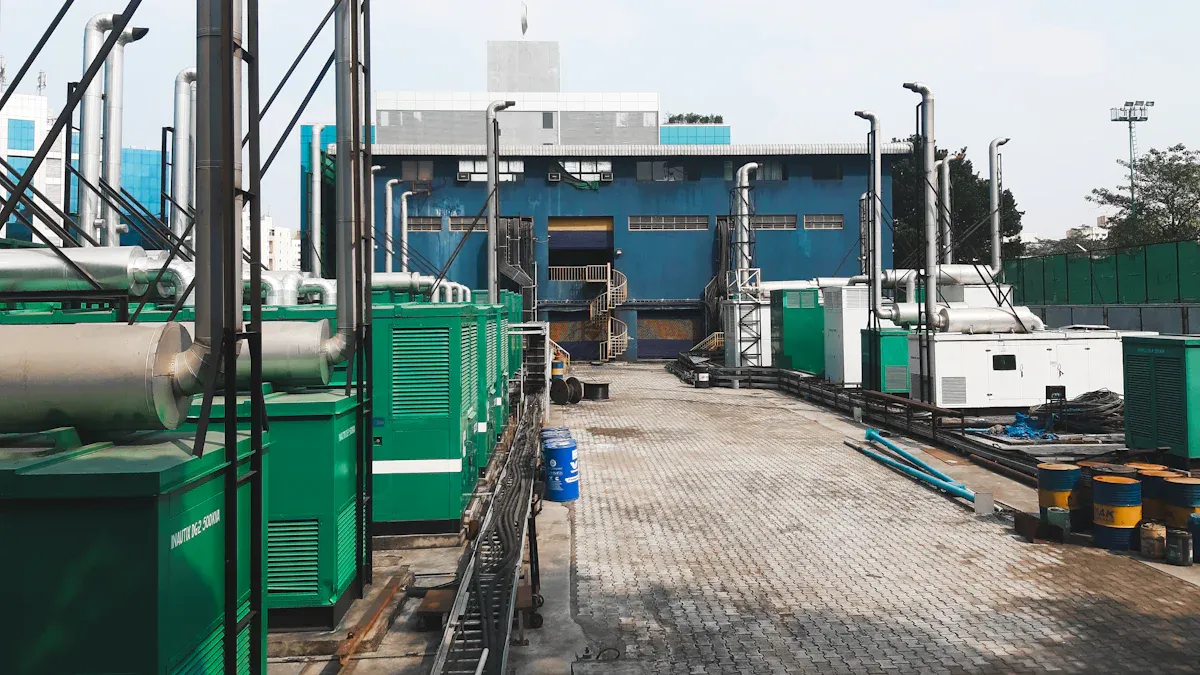
The consolidation process culminates in one critical decision: choosing the partner who will anchor your supply chain. This choice determines whether your streamlined approach delivers lasting value or introduces new vulnerabilities. A rigorous evaluation framework separates dependable global distributors from mere vendors.
Evaluating Technical Expertise and Inventory Depth
Technical expertise begins with OEM compatibility. A partner must demonstrate proven capability across the major generator platforms—Cummins, Caterpillar, Perkins, and Weichai. Ask pointed questions about factory authorization and technician training documentation. A supplier that handles multiple brands can diagnose interactions across a mixed fleet and consolidate service contracts into a single agreement.
Inventory depth matters equally. The partner should stock both genuine OEM components and premium aftermarket alternatives that meet or exceed original specifications. This dual inventory strategy provides flexibility during supply shortages while maintaining quality standards. Megawatts Parts exemplifies this approach, offering comprehensive coverage for engine parts, filters, alternators, and breakers across all major brands.
Counterfeit parts pose a genuine operational hazard. Procurement teams must verify that suppliers use traceable, authorized distribution channels. Structured supply chain audits reduce the risk of substandard components entering your inventory. A partner with documented sourcing protocols and quality verification procedures demonstrates the technical depth necessary for long-term reliability.
Building a Partnership for Future Growth
Value-added services distinguish strategic partners from transactional suppliers. Live customer support, fast shipping, and responsive technical advice for compatibility issues indicate a supplier invested in your operational continuity. Megawatts Parts provides these services alongside a 90-day free returns policy, reducing the financial risk of testing new components.
Service level agreements formalize the partnership expectations. A well-structured SLA protects both parties and establishes accountability:
|
Component |
Role in Successful Vendor Partnership |
|
Service definition |
Eliminates ambiguity by clearly outlining scope of services |
|
Performance metrics |
Sets measurable standards (KPIs/KRIs) to track performance |
|
Response and resolution expectations |
Ensures prompt issue handling and escalation procedures |
|
Penalties and remedies |
Provides accountability through financial penalties or corrective actions |
|
Change management |
Allows adaptation of services and metrics as relationship evolves |
|
Termination conditions |
Protects the partnership by addressing repeated violations |
SLAs strengthen vendor relationships by ensuring transparency, reliability, and accountability – setting the stage for a long, productive partnership.
Regular business reviews complement the SLA framework. Quarterly meetings to assess on-time delivery rates, order accuracy, and responsiveness drive continuous improvement. A global distributor like Megawatts Parts, with operations in China, Saudi Arabia, Colombia, and Nigeria, offers the geographic resilience needed for consistent Generator Sets Parts supply across regions. This combination of technical expertise, service commitment, and global reach transforms a supplier relationship into a strategic asset.
The path from fragmented supplier management to a consolidated approach transforms procurement operations. Cost savings matter, yet the deeper goal is building resilience for critical power assets. A streamlined supply chain withstands disruptions, simplifies forecasting, and ensures consistent availability of Generator Sets Parts when operations depend on them.
Success hinges on selecting a partner with global reach, technical expertise, and proven reliability. Megawatts Parts demonstrates these qualities through its worldwide presence and comprehensive inventory. Their value-added services—including live support, fast shipping, and 90-day free returns—extend equipment life and simplify budgeting.
Conduct your supplier audit using the steps outlined above. Conduct your supplier audit using the steps outlined above. Contact Megawatts Parts for a free consultation, or explore our comprehensive Generator Sets Parts catalog to see potential savings firsthand.
FAQ
How does vendor consolidation reduce single-sourcing risk?
Consolidation does not mean dependence on one supplier. A global distributor like Megawatts Parts maintains inventory across multiple regions—China, Saudi Arabia, Colombia, and Nigeria. If one location faces disruption, stock redirects from another. The 90-day free returns policy also allows sample validation before committing to volume orders.
How long does a typical consolidation transition take?
A phased approach protects operations. Start with a pilot category, such as routine maintenance kits. Test the new vendor for 30 days, measuring on-time delivery and order accuracy. After the pilot succeeds, scale to complex categories. Most transitions complete within one to two quarters.
What metrics should I track after consolidating suppliers?
Monitor on-time delivery rate, order accuracy, and lead time consistency. Compare these against your pre-consolidation baseline. Track invoice processing time and procurement administrative hours. A successful consolidation should reduce transaction volume by 40–60 percent while maintaining or improving delivery performance.
Are aftermarket generator sets parts as reliable as genuine OEM components?
Premium aftermarket parts meet or exceed OEM specifications when sourced from a trusted distributor. Megawatts Parts offers both genuine and aftermarket options, with documented sourcing protocols and quality verification. Always request samples for cross-referencing before mass ordering. The 90-day free returns policy provides additional protection during evaluation.
When is the right time to begin vendor consolidation?
Start when supplier fragmentation creates measurable pain: rising administrative costs, frequent delivery delays, or inconsistent part quality. Conduct the supplier audit outlined in this guide. If your top 20 SKUs span more than five vendors, consolidation likely delivers immediate savings. Contact Megawatts Parts for a free consultation to assess your current spend.
Previous And Next
-
Previous Post:
 BLOG
BLOG Megawatts BlogIntroducing the components of a diesel engineIntroducing the components of a diesel engine A diesel generator set is a type of internal combustion generator set and is currently one of the most widely used power generation devices in the world....
 -
Next Post:
 BLOG
Megawatts BlogPreventing Engine Seizure: When to Upgrade to Connecting Rod Bearings for Heavy-Duty FleetsEngine seizure represents one of the most expensive failures a heavy-duty fleet can experience. A single seized engine demands complete overhaul or replacement, costing tens of thousands in parts and...
BLOG
Megawatts BlogPreventing Engine Seizure: When to Upgrade to Connecting Rod Bearings for Heavy-Duty FleetsEngine seizure represents one of the most expensive failures a heavy-duty fleet can experience. A single seized engine demands complete overhaul or replacement, costing tens of thousands in parts and...
Read More
-
 BLOG
Megawatts BlogTotal Cost of Ownership (TCO) in Fleet Maintenance: Hidden Logistics Costs of Sourcing Multiple OEMsWhat hidden logistics costs emerge when sourcing multiple OEMs? How heavily do they weigh on Total Cost of Ownership (TCO) in Fleet Maintenance? A fleet manager compares two identical parts at differe...
BLOG
Megawatts BlogTotal Cost of Ownership (TCO) in Fleet Maintenance: Hidden Logistics Costs of Sourcing Multiple OEMsWhat hidden logistics costs emerge when sourcing multiple OEMs? How heavily do they weigh on Total Cost of Ownership (TCO) in Fleet Maintenance? A fleet manager compares two identical parts at differe... -
 BLOG
Megawatts BlogAnatomy of a Breakdown: Warning Signs Your Engine Driven Water Pump is Failing Before It LeaksAn engine-driven water pump typically broadcasts failure well before it drips. The pre-leak danger window is that brief period when noise, odor, temperature swings, or residue appear but no puddle for...
BLOG
Megawatts BlogAnatomy of a Breakdown: Warning Signs Your Engine Driven Water Pump is Failing Before It LeaksAn engine-driven water pump typically broadcasts failure well before it drips. The pre-leak danger window is that brief period when noise, odor, temperature swings, or residue appear but no puddle for... -
 BLOG
Megawatts BlogStrategic Sourcing: How to Build a Standardized Generator Sets Parts Catalog for Mixed FleetsManaging a mixed fleet of Cummins, Perkins, and Caterpillar generators often creates a hidden financial drain through inventory duplication and fragmented procurement. When different brands use differ...
BLOG
Megawatts BlogStrategic Sourcing: How to Build a Standardized Generator Sets Parts Catalog for Mixed FleetsManaging a mixed fleet of Cummins, Perkins, and Caterpillar generators often creates a hidden financial drain through inventory duplication and fragmented procurement. When different brands use differ... -
 BLOG
Megawatts BlogDiesel Generator Won't Crank: A Step-by-Step Electrical Diagnostic Checklist for MechanicsWhen a diesel generator won't crank, check the electrical system first. Do not chase fuel or mechanical theories yet. Low battery voltage and corroded connections cause most no-start condition calls....
BLOG
Megawatts BlogDiesel Generator Won't Crank: A Step-by-Step Electrical Diagnostic Checklist for MechanicsWhen a diesel generator won't crank, check the electrical system first. Do not chase fuel or mechanical theories yet. Low battery voltage and corroded connections cause most no-start condition calls....
Subscribe to enjoy 10% off
Stay informed about new products and sales

-
INFORMATION
Contact Us
-
CHINA SALES OFFICE: No. 2-11, No. 8, Gaotai Road, Gaishan Investment Zone, Cangshan District, Fuzhou, Fujian
-
SAUDI ARABIA FACTORY: 7264 Shakra, Al Faisaliyyah, REFB3035, 3035, Riyadh 12883
-
COLOMBIA SALES OFFICE: 92-32 26th Street, 03-118, Bogota
-
NIGERIA FACTORY: Plot 5 Chivita Avenue Ajao Estate Isolo Lagos
-
Email:sales@megawattsparts.com
Follow Us


Copyright © 2025 Megawatts All Rights Reserved.



Select Previous Button or Search Directly on Search Bar!
Shop All
 English
Currency: <{ pagedata.current_currency }>(<{ pagedata.current_currency_code }>)
Are you in the right place?

You agree to MegaWatts.com's Terms of Use and Privacy Policy by subscribing. You may receive emails with useful tips, promotions, and offerings.
No, thanks. I'd rather pay full price.